Introduction
Baseball has many statistics, but some are more important than others. One of the most useful pitching stats is WHIP. Many new fans ask: what is whip in baseball and why analysts talk about it so much during games.
In simple words, WHIP measures how many runners a pitcher allows to reach base per inning. It tells you how well a pitcher prevents hitters from getting on base. The lower the number, the better the pitcher is performing.
This guide will explain:
- what is whip stat in baseball
- what is the whip stat in baseball and how to calculate it
- what is a good whip in baseball
- why coaches and scouts rely on it
In Baseball What Is WHIP?

In baseball what is whip?
WHIP stands for:
Walks + Hits Per Inning Pitched
It shows how many baserunners a pitcher gives up during each inning.
The formula is:
WHIP = (Walks + Hits) ÷ Innings Pitched
This stat focuses only on two things:
- Hits allowed
- Walks allowed
It does NOT include:
- Errors
- Hit by pitch
- Fielding mistakes
So WHIP measures a pitcher’s direct responsibility only.
What Is WHIP Stat in Baseball Used For?
The whip stat in baseball is used to judge pitching control and dominance.
Think about it this way:
A pitcher with many baserunners constantly pitches under pressure.
A pitcher with few baserunners controls the game.
WHIP helps answer one simple question:
How hard is it for hitters to reach base against this pitcher?
Lower WHIP = harder to hit or walk
Higher WHIP = easier to reach base
What Is the WHIP Stat in Baseball Compared to ERA?
Many fans confuse WHIP and ERA. Both measure pitching performance but in different ways.
ERA (Earned Run Average)
Shows how many runs a pitcher allows.
WHIP
Shows how many runners reach base.
Important difference:
A pitcher may allow few runs but still allow many baserunners.
WHIP reveals hidden problems that ERA might hide.
Example:
Pitcher A
ERA: 2.80
WHIP: 1.50 → lots of danger situations
Pitcher B
ERA: 3.20
WHIP: 1.05 → much safer pitcher
Most coaches prefer the second pitcher because he prevents trouble.
How to Calculate WHIP
Let’s calculate WHIP with a simple example.
Pitcher Stats:
- Innings pitched: 6
- Hits allowed: 5
- Walks allowed: 1
Formula:
WHIP = (Walks + Hits) ÷ Innings Pitched
WHIP = (1 + 5) ÷ 6
WHIP = 6 ÷ 6
WHIP = 1.00
This means the pitcher allowed one runner per inning.
Very good performance.
Why WHIP Is Important in Modern Baseball
Baseball analysis today focuses on preventing baserunners. Runs happen only after runners reach base.
So WHIP directly predicts:
- Game control
- Pitcher consistency
- Future performance
Scouts often trust WHIP more than wins and losses because wins depend on team offense.
A pitcher can throw perfectly and still lose if his team cannot score.
WHIP shows the pitcher’s personal skill only.
What Is a Good WHIP in Baseball?
Now the big question: what is a good whip in baseball?
Here is a simple rating scale:
| WHIP | Performance Level |
| Below 1.00 | Elite / Cy Young level |
| 1.00 – 1.10 | Excellent |
| 1.11 – 1.25 | Above average |
| 1.26 – 1.35 | Average |
| 1.36 – 1.50 | Below average |
| Above 1.50 | Poor |
So if someone asks what is a good whip in baseball, the general answer is:
Anything around 1.20 or lower is considered good.
What Affects a Pitcher’s WHIP?
Several pitching skills impact WHIP.
1. Control
Pitchers who throw strikes walk fewer batters.
Fewer walks = lower WHIP
2. Command
Good location prevents strong hits.
Weak contact = fewer hits
3. Pitch Movement
Breaking balls and fastball movement make hitters miss.
Misses = fewer baserunners
4. Mental Composure
Pressure situations cause mistakes. Calm pitchers maintain low WHIP.
How Hitters Influence WHIP
Even though WHIP measures pitchers, hitters indirectly affect it.
Strong offenses:
- Force more walks
- Create more hits
- Increase WHIP
Weak offenses:
- Swing early
- Make easy outs
- Lower WHIP
So ballparks and league level matter when evaluating stats.
WHIP in Different Levels of Baseball
WHIP values change depending on competition.
Youth Baseball
Average WHIP: 1.40 – 2.00
Young players still learning control.
High School
Average WHIP: 1.20 – 1.50
Pitchers begin mastering mechanics.
College
Average WHIP: 1.10 – 1.35
More skilled hitters and pitchers.
Professional Level
Average WHIP: about 1.30
Elite pitchers below 1.10
So always compare WHIP within the same level.
How Coaches Use WHIP for Training
Coaches rely on WHIP to improve players.
They analyze:
- Walk rate
- Hit rate
- Pitch efficiency
If WHIP is high, they adjust:
- Mechanics
- Strike zone approach
- Pitch selection
WHIP helps identify problems faster than ERA.
WHIP vs Strikeouts: Which Is Better?
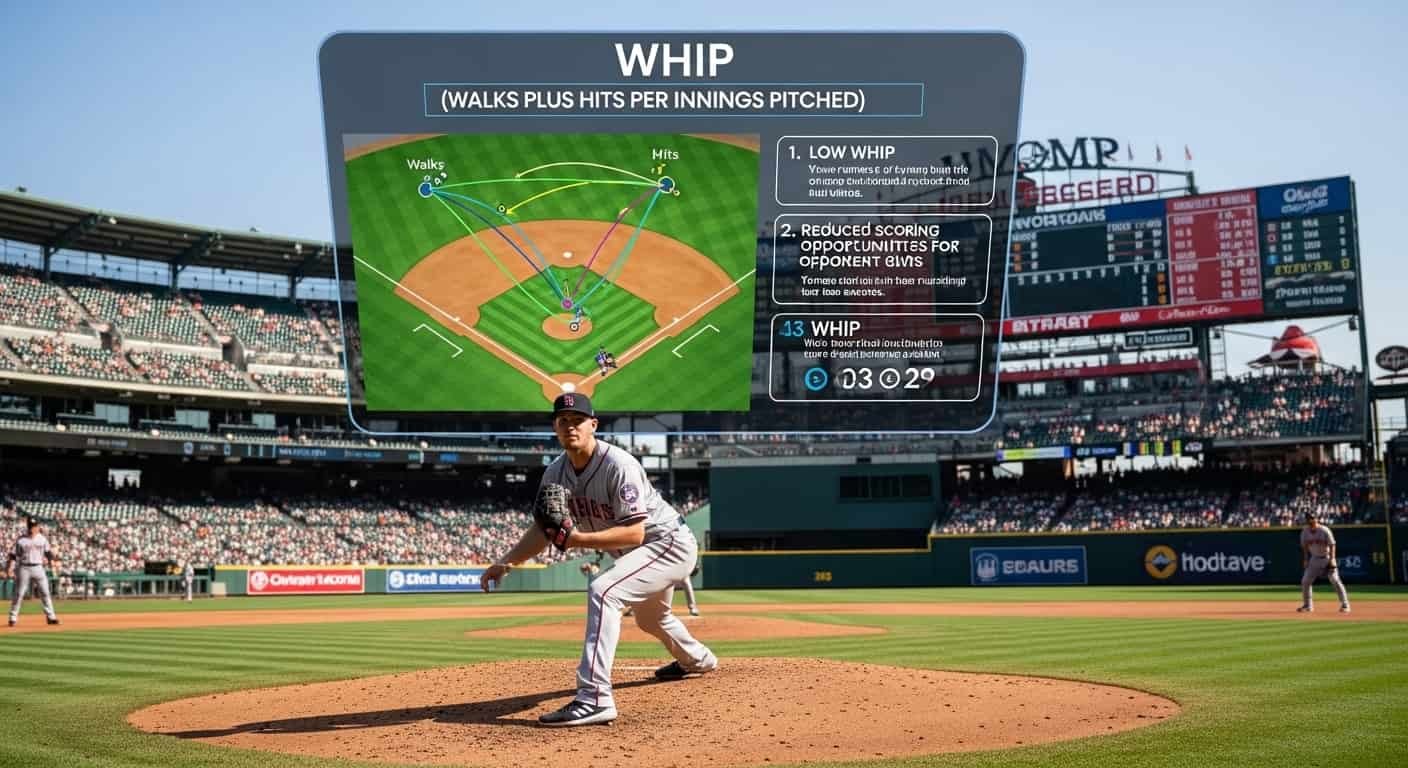
Strikeouts look impressive but WHIP matters more for consistency.
A pitcher can strike out many batters but still:
- Give many walks
- Allow many hits
That creates a high WHIP.
Great pitchers combine:
- Good strikeouts
- Low WHIP
Control always beats power pitching over a long season.
Common Misunderstandings About WHIP
Myth 1: WHIP measures defense
False — errors are excluded.
Myth 2: Low ERA means low WHIP
Not always true.
Myth 3: Wins show better pitching
Wins depend on teammates.
WHIP isolates the pitcher’s real performance.
Quick Examples to Understand WHIP
Pitcher A:
2 innings, 4 hits, 2 walks
WHIP = 6 ÷ 2 = 3.00 → terrible outing
Pitcher B:
7 innings, 5 hits, 1 walk
WHIP = 6 ÷ 7 = 0.86 → dominant performance
Even without knowing runs, you can judge the better pitcher instantly.
Why Fans Should Learn WHIP
Knowing what is the whip stat in baseball makes watching games more interesting.
You can predict:
- Which pitcher may collapse
- Which reliever is reliable
- Who will succeed long term
Broadcasters and analysts use it constantly because it predicts performance better than many traditional stats.
Conclusion:
So, what is whip in baseball?
It is one of the clearest and most honest pitching statistics. It shows how many runners a pitcher allows per inning and reveals true pitching skill.
Key takeaways:
- WHIP = Walks + Hits per inning
- Lower WHIP means better pitcher
- Around 1.20 or lower is good
- More accurate than wins
- Predicts future performance
Understanding WHIP helps fans, players, and coaches evaluate pitching smarter. Once you learn this stat, baseball becomes easier to analyze and far more enjoyable to watch.