Introduction
In any democratic society, citizens are expected to participate in politics, vote in elections, and express opinions about public issues.
However, not everyone feels their voice matters. Some people believe they can influence government decisions, while others think their participation changes nothing.
This feeling — whether individuals believe they can affect political processes — is called political efficacy.
Understanding political efficacy helps explain why people vote, protest, engage in debates, or sometimes completely avoid politics.
Political Efficacy Definition
Define Political Efficacy
The political efficacy definition refers to a citizen’s belief that they understand politics and can influence political decisions.
In simple terms:
Political efficacy is the confidence people have in their ability to participate effectively in politics.
When citizens feel their actions matter, they become more politically active. When they feel powerless, they disengage.
What Is Political Efficacy?
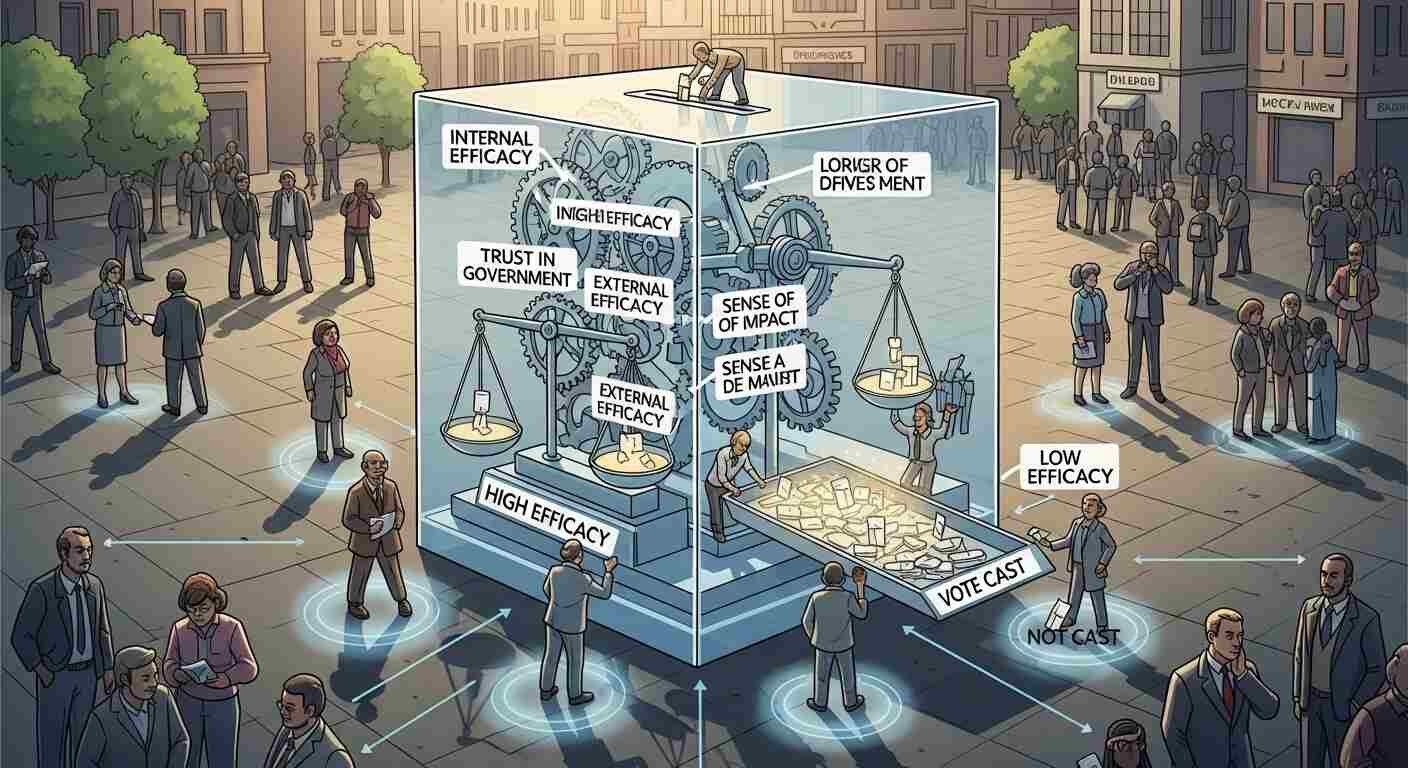
What Is Political Efficacy in Simple Words?
What is political efficacy?
It is the belief that:
- You understand political issues
- Your participation can influence government
People with high political efficacy are more likely to:
- Vote in elections
- Discuss political topics
- Contact representatives
- Join public movements
People with low political efficacy often avoid political involvement entirely.
Types of Political Efficacy
Political scientists divide efficacy into two main categories.
Internal Political Efficacy
Internal efficacy means a person believes they understand politics.
Examples:
- Knowing how elections work
- Understanding public policies
- Feeling confident discussing issues
External Political Efficacy
External efficacy means a person believes the government listens to citizens.
Examples:
- Believing voting matters
- Trusting leaders respond to public opinion
- Feeling public protests can bring change
Both forms are necessary for a healthy democratic system.
Why Political Knowledge and Efficacy Important for a Democracy?
Democracy depends on citizen participation. Without public involvement, democratic institutions weaken.
Political knowledge and efficacy are important because they:
1. Encourage Voting
Citizens who believe their vote matters participate more in elections.
2. Strengthen Accountability
Governments act responsibly when citizens monitor them.
3. Improve Policy Decisions
Informed citizens make better collective choices.
4. Prevent Authoritarianism
A disengaged population allows power concentration.
5. Promote Civic Responsibility
People take responsibility for national progress.
In short, democracy survives when people believe they matter.
Relationship Between Political Knowledge and Political Efficacy
Political knowledge directly increases political efficacy.
When citizens understand political systems:
- They feel confident discussing issues
- They trust their judgments
- They participate more actively
Lack of knowledge leads to confusion and withdrawal from politics.
Knowledge builds confidence, and confidence builds participation.
Factors That Influence Political Efficacy
Education
Educated individuals tend to understand political systems better.
Media Exposure
News consumption improves awareness of public issues.
Social Environment
Families and communities influence political attitudes.
Government Transparency
Open governments increase citizens’ trust.
Economic Stability
Financial security allows more civic engagement.
Political Efficacy and Voting Behavior
People with strong political efficacy are more likely to vote.
Why?
They believe:
- Elections matter
- Their vote counts
- Policies affect their lives
Low efficacy leads to voter apathy and low turnout.
Thus, increasing efficacy strengthens democratic participation.
Political Efficacy Among Youth
Young citizens often show lower external efficacy because they feel ignored by leaders.
However, youth engagement increases when:
- Civic education improves
- Social discussions grow
- Leaders address youth issues
Encouraging early participation creates lifelong democratic habits.
Political Efficacy in Developing Democracies
In emerging democratic systems, political efficacy plays an even bigger role.
Citizens must believe change is possible; otherwise:
- Corruption increases
- Participation decreases
- Trust collapses
Strong civic belief builds stable political systems.
Consequences of Low Political Efficacy
When people feel powerless:
- Voter turnout drops
- Political misinformation spreads
- Extremism increases
- Public trust declines
Democracy weakens when citizens disconnect from governance.
How Governments Can Improve Political Efficacy
Civic Education Programs
Teaching citizens how political systems work.
Transparent Decision-Making
Explaining policies clearly to the public.
Public Participation Opportunities
Town halls and community discussions.
Fair Elections
Trustworthy voting processes increase confidence.
Responsive Leadership
Acknowledging public concerns builds belief.
Role of Media in Political Efficacy
Media shapes citizens’ perception of influence.
Positive role:
- Inform citizens
- Encourage discussion
- Promote awareness
Negative role:
- Spread misinformation
- Create distrust
- Reduce confidence
Balanced media strengthens democratic participation.
Political Efficacy and Social Movements
Protests and movements often begin when people believe collective action works.
High efficacy leads to:
- Community organization
- Advocacy campaigns
- Policy reform efforts
Low efficacy leads to silence and withdrawal.
Political Efficacy in the Digital Age
Social media has changed political participation.
People now:
- Share opinions online
- Discuss public issues instantly
- Mobilize support quickly
Digital platforms can increase external efficacy when citizens see real responses from authorities.
Conclusion:
Political efficacy is one of the most important elements of a functioning democracy. It determines whether citizens participate actively or withdraw completely from public life.
To summarize:
- Political efficacy definition: belief in understanding and influencing politics
- What is political efficacy: confidence in political participation
- Why are political knowledge and efficacy important for a democracy: they ensure accountability, participation, and stability
A democratic system does not survive on elections alone — it survives when citizens believe their voices matter.
When people feel heard, democracy grows stronger. When they feel powerless, democracy weakens.
Therefore, building political knowledge and increasing political efficacy is essential for a healthy and stable society.